7 Deep Breathing Techniques That Fight Stress and Anxiety
Stress and anxiety are two notoriously
overlooked health issues. They are also among the most common, but you
probably already know that since the majority of people have experienced
stress or anxiety at least once in their lives. And for many, fighting
stress and anxiety is a constant struggle.
Apart from the crippling worries, irritability, and even anger that
often accompany these conditions, one could also be dealing with
physical symptoms like fatigue, sleep problems, muscle pain, and
digestive issues, not to mention that anxiety and stress predispose you
to and worsen most serious health issues. Therefore, reducing anxiety
and stress is an immensely important task.
Breathing exercises are an excellent tool for achieving that goal and
improving your overall lung health and sleep as well. Here are the 7
best breathing exercises to promote calmness and mental wellness. They
only take a few minutes every day, so incorporating them into your daily
routine or whenever you feel anxious or stressed is quite easy.
1. Deep Breathing Through Belly\
1. Deep Breathing Through Belly\
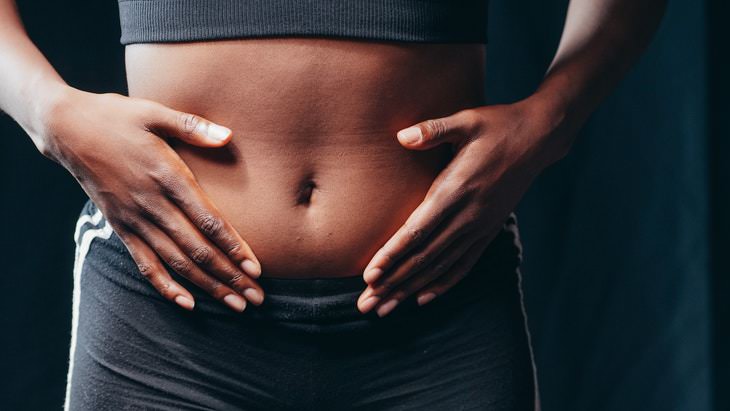
Deep breathing through the belly engages
the diaphragm, a flat muscle spanning across the bottom of the ribcage.
Learning to breathe by engaging the diaphragm in addition to the chest
muscles is important for deepening and slowing down the breath, which is
beneficial for improving concentration and alleviating stress. Learning
this technique is rather easy and safe for anyone willing to give it a
go. Like any exercise, it takes practice and time, so don’t worry if you
don’t see results right away.
Here’s how to breathe through the belly:
1. Sit down in a comfortable position. Put one hand on your chest and
the other underneath your ribcage.
2. Inhale deeply through the nose, and then exhale completely through
the mouth, engaging your belly muscles to push out the air. If you’re
doing the exercise correctly, you should feel with your hands that your
belly is expanding and contracting, but the ribcage is staying
relatively still.
3. Repeat these steps 5 to 10 times.
2. Roll Breathing
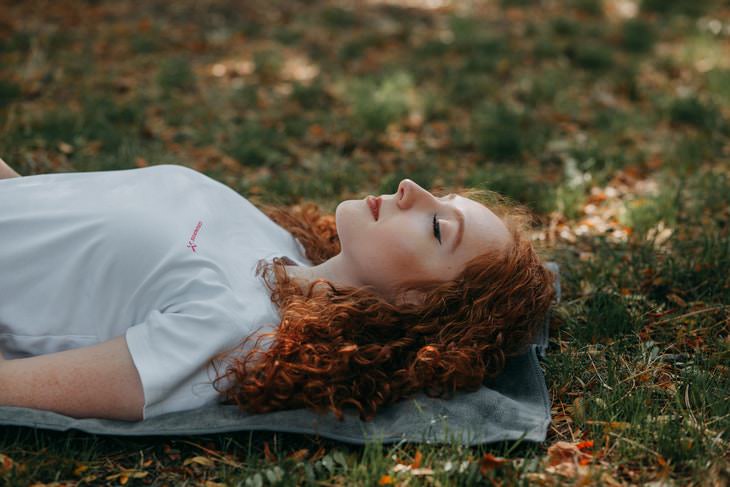
Anxiety and stress can manifest themselves
through shortness of breath. Sometimes, extreme anxiety can develop into
a panic attack, which is characterized by increased heart rate and
breathlessness. Roll breathing can help you regain your full lung
capacity and make you calmer overall by gradually activating all
breathing muscles.
We recommend that you practice this breathing exercise laying down
because it can make some people a little lightheaded. Practice roll
breathing as slowly as you can to garner calmness. Always inhale through
the nose and exhale through the mouth.
How to practice roll breathing:
1. Lie down and start by practicing belly breathing and filling your
lower lungs with air. See the previous exercise for instructions. Repeat
8-10 times.
2. Now switch to starting an inhale from the lower lungs and then
continuing the inhale through the upper chest and the upper lungs. The
exhale should also begin by tightening the belly and then continuing to
breathe out through the chest - like a wave. Pursing your lips and
making a whooshing sound helps you breathe out more fully as well.
3. Practice this breathing technique for 3-5 minutes. In the end, you
should feel more focused and relaxed.
3. The Wim Hof Method
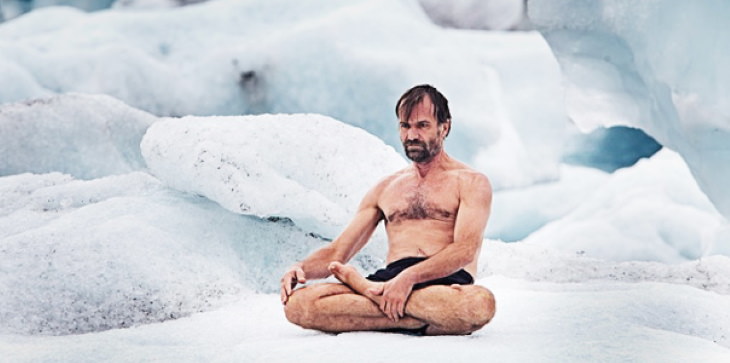
Are you familiar with Wim Hof? The Dutch
extreme athlete is well known for incredible feats like climbing Mt.
Kilimanjaro in shorts and running a marathon barefoot on ice and snow.
Learn more about the 62-year-old athlete here - Is It Possible to
Control Your Immune System?
Hof says that he wouldn’t be able to achieve any of this without the
breathing exercise he had developed. This technique involves holding
deep breaths for extended periods of time as a way to increase
resilience to both physical and mental stressors. This method is also
known to increase energy levels and concentration. Due to the fact that
this exercise requires you to hold your breath for a long time, it could
potentially make some people lose consciousness. For this reason, it’s
important to try this technique while lying down.
How to do the Wim Hof method:
1. Lie down in a safe environment and start by breathing in and out
30-40 times. The ending breath should be as deep as you can take.
2. With an open mouth, exhale completely and hold. The time you’ll be
able to hold your breath without inhaling depends on your body’s fitness
and practice.
3. Breathe in when you feel that you need it. Finish the exercise by
taking one more slow and deep inhale and exhale. It’s normal to
experience a tingling sensation or slight lightheadedness after the
exercise.
4. Nadi Shodhana - alternate nostril breathing
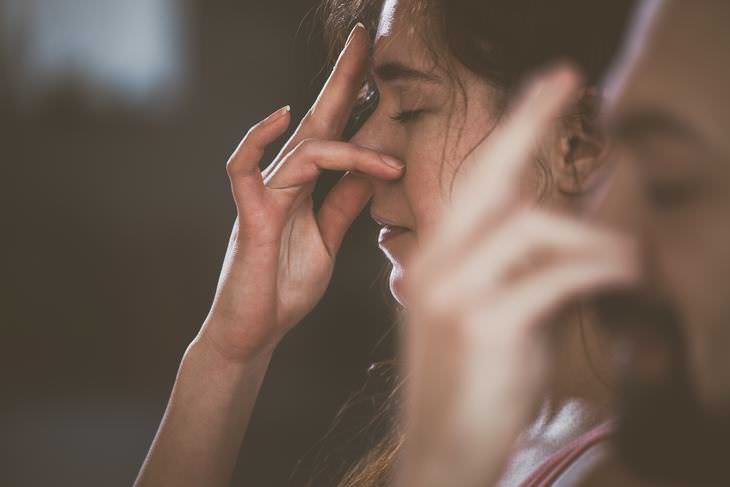
Alternate nostril breathing (or Nadi
Shodhana) is a pranayama exercise, which is the name for yogic breathing
techniques. This technique has many proven benefits and is widely used
in therapy to promote focus, relaxation, stress relief, and mindfulness.
As the name suggests, alternate nostril breathing involves alternating
between the nostrils as you inhale and exhale. The technique activates
the nervous system, improves breathing, alleviates stress and anxiety,
and lowers blood pressure.
Here’s how to practice Nadi Shodhana:
1. Sit down in a comfortable seat and close the left nostril with your
left thumb. Slowly inhale through the right nostril.
2. At the peak of the inhalation, pause for a second while closing the
right nostril with the left ring finger. Finally, open up the left
nostril and exhale through it.
3. Repeat the same steps on the other side. Continue switching sides and
doing this exercise for 2-3 minutes.
5. Birthday candle breathing


When you’re feeling anxious, you could
start hyperventilating, which upsets the balance of oxygen and carbon
dioxide in the blood and makes you feel breathless or dizzy. This
exercise is especially beneficial for those cases, or whenever you are
feeling worried or anxious.
As the name suggests, this exercise mimics the movement of your lips
when you’re trying to blow out a candle. This exercise is easy and
effective - simply purse your lips when you exhale, and make sure to
breathe out as slowly as you can. Continue this exercise for 2-5
minutes, and you’re sure to feel calmer right away.
6. Resonant breathing
Resonant breathing is a practice that
requires that you inhale and exhale on a count of 5, making a total of 5
full breaths in 1 minute. This technique is also known as coherent
breathing, and it was shown in studies to reduce stress, improved your
mood, and increase heart rate variability (HRV) in those with low HRV.
Here’s how to practice resonant breathing yourself:
1. Lie down in a comfortable position, close your eyes.
2. Inhale through your nose for a count of 5 seconds. No need to breathe
in too deeply.
3. Exhale for 5 seconds, allowing the air to escape from your lungs
slowly and steadily.
4. Continue breathing like this for 5 minutes or up to 10 minutes.
7. Lion's breath
This is only for your information, kindly take the advice of your doctor for medicines, exercises and so on.
Lion's breath is another pranayama
technique. It exhaling with the mouth open wide and tongue out, which is
said to be similar to a lion’s yawn. If you can’t picture it, don’t
worry - that’s why we included a step-by-step video tutorial that
displays this breathing technique in detail. Apart from reducing stress,
this pranayama exercise also strengthens your throat muscles, vocal
cords, and upper chest muscles.
How to practice Lion’s breath
1. Sit up tall in a comfortable seat. Inhale slowly and deeply through
your nose.
2. As you exhale, make a long “ha” sound, stick out the tongue, and open
your eyes wide.
3. Repeat the breathing cycle 2-3 times.


Comments
Post a Comment