Exercise Guide for Squatting
The squat, whether performed kneeling or
standing, is a widely recognized exercise familiar to most people, even
those who don't regularly engage in sports or exercise. It is a highly
effective way to strengthen the lower body, with various techniques
available to perform it. However, like any fitness routine, incorrect
execution can lead to long-term damage or even injury, making it crucial
to focus on maintaining a stable posture and proper movements. To help
you achieve the perfect squat, this guide will cover the common mistakes
to avoid, how to adjust your movements, and useful techniques.
Performing the squat exercise can provide numerous advantages as it
targets significant muscles like the quadriceps, hamstrings, and gluteus
maximus. Despite its seemingly simple nature, it is a complicated
exercise that involves various central joints such as the hip, knee, and
ankle. To avoid the potential damage that may lead to chronic injuries
in the spine or knees and achieve desirable outcomes, it is essential to
refrain from committing the following mistakes:
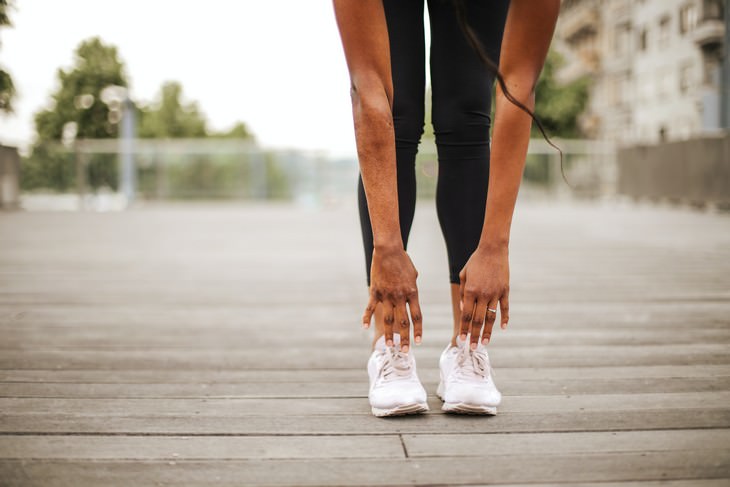
1. Avoid skipping warm-up exercises
Before undertaking any fitness routine, it is crucial to perform proper
warm-up exercises that effectively prepare the body for the upcoming
physical exertion. To prepare for the squat exercise, follow these
steps:
A. Increase body temperature and heart rate via aerobic activities such
as jogging.
B. Engage in light exercises that activate the muscles involved in the
workout. You may choose one or two of the nine exercises meant for leg
and lower body training.
C. To properly prepare the body for exercise, it is important to shake
the bones and joints and perform several squats as part of the warm-up.
2. Start your movement from the hips and
not the knees
When performing a squat, it is crucial to initiate the movement from the
pelvis, rather than the knees. This prevents excessive pressure on the
quadriceps femoris muscle and reduces injury risk. To ensure proper
form, it is recommended to work with a fitness trainer or use a mirror
or camera to check posture and adjust as necessary. Additionally, it is
imperative to keep the knee behind the toe line when squatting.
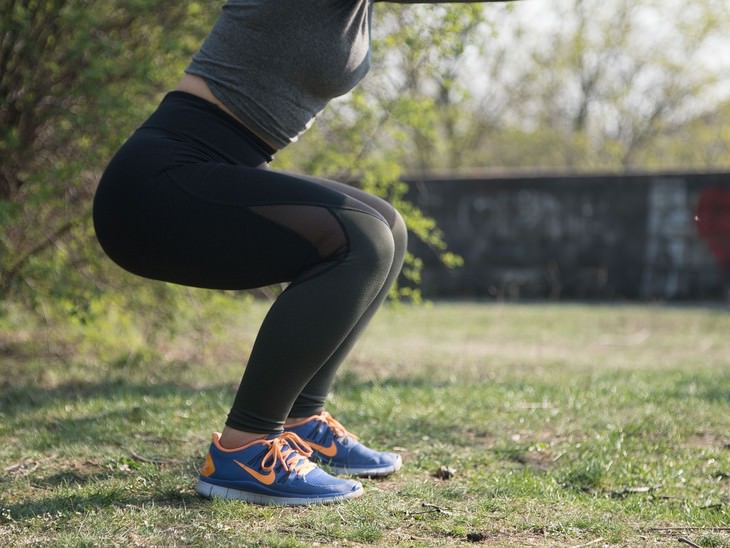
3. Leave your knee behind the toe line
When performing a squat, it is important to avoid letting your knee
cross the toe line while lowering your pelvis and bending your legs back
90 degrees. This mistake can be detrimental to those with leg injuries
or limited flexibility, as well as to those who want to maintain a
stable position.
4. Never stop in the middle
It is crucial to complete the squat movement until the hips are parallel
to the ground to fully reap its benefits and prevent injury. Keeping
your back straight and your buttocks outward is also key to proper form
during squats. Unless medical reasons prevent it, most people should be
able to complete the full movement with determination and effort.
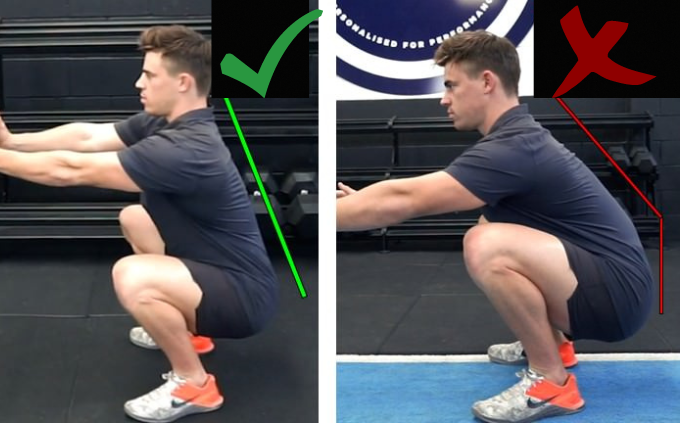
5. Keep your back straight and your rear pointing outwards
When we exercise, we often make assumptions that harm our posture and
increase injury risk. It is critical to avoid arching your back and
tucking into your buttocks when squatting. Instead, keep your back
straight and your buttocks protruding outwards to maintain a healthy
spinal position. Strengthening your hamstring muscles is key to a stable
stance during squats. In fact, poor movement execution is often due to
weakness in this muscle group. You can refer to the image or
instructional video (available in English) at the provided link to learn
how to maintain proper form during squats.
how to squat
A. The standing phase: place your feet on
the line of your shoulders with them facing slightly outwards. Keep your
chest upright and stable. Put your hands forward.
B. The downward movement phase: bend the pelvis downwards in a uniform
movement and breathe. Maintain a straight back, make sure that the knees
are behind the toe line and straight (not leaning in), and that at the
end of the movement, the hips and pelvis are parallel to the ground.
C. The upward movement phase: raise the pelvis in a uniform movement,
exhale, and move to a standing position - make sure at the end of the
movement not to completely straighten the knees but to leave a slight
bend, so as not to overload them.
Four techniques for better results
1. Maintaining a stable posture using a yoga ball
Sets: 3 | Repetitions: 15
A. Stand with your back to a wall with your lower part resting on a
large yoga ball that separates you from the wall.
B. Place your feet in line with your shoulders and press your back into
the ball.
C. Lower your pelvis and buttocks while pressing your back against the
ball until your thighs are parallel to the ground.
D. Press your feet to the ground and lift your pelvis to return to a
standing position.
This technique has the advantage of promoting good posture by keeping
your chest up and back straight. Additionally, it strengthens your core
muscles when you pull your arms forward.
2. Strengthening your gluteal and hip muscles by leaning against a wall:
Sets: 3 | Resting time: 30 seconds
https://gscrochetdesigns.blogspot.com. one can see my crochet creations
https://gseasyrecipes.blogspot.com. feel free to view for easy, simple and healthy recipes
https://kneereplacement-stickclub.blogspot.com. for info on knee replacement
https://cancersupportindia.blogspot.com for infor on cancer and health related topics
https://GSiyers home remedies.blogspot.com is the latest addition to my blogs. I'm going to add posts there, do give me your valuable feed back on my blogs. Thanks a lot, take care, be healthy and be happy.
A. Stand with your back against a straight
wall with your feet shoulder-width apart.
B. Lower your pelvis and buttocks until your thighs are parallel to the
ground while pressing your back against the wall.
C. Activate your core muscles and hold this position for about 30
seconds before carefully climbing back up.
The advantages of the technique: this method is an excellent way to
strengthen the glutes and thighs, which are among the most important for
performing the squat. As these muscles get stronger over time you can
extend the time you stay in the pose from 30 seconds to 50 and so on.
You can also add weight to challenge yourself.
3. Control the depth of movement using a box or chair
Sets: 3 | Repetitions: 15
A. Stand with your feet shoulder-width apart and a sturdy chair or box
behind you.
B. Begin the squat movement by lowering your pelvis and buttocks in a
steady motion until your butt lightly touches the chair or box behind
you.
C. With the buttocks touching the item, raise your pelvis back in a
steady motion until you're straight.
Advantages of the technique: using a chair or a box will give you
maximum control over the depth of your movement and a correct stance
when the chest is stretched and lifted. As you practice more you will
eventually be able to use a lower box or chair to challenge yourself.
4. Maintaining a stable stance using a bar
This is only for your information, kindly take the advice of your doctor for medicines, exercises and so on. Sets: 3 | Repetitions: 15
A. Begin by standing with your feet shoulder-width apart and holding a
bar or stick above your head with both hands.
B. Lower your pelvis and buttocks, while maintaining a strong core and
grip on the bar, until your thighs are parallel to the ground.
C. Raise your pelvis slightly to shift your weight to your heels, and
carefully return to the starting position while keeping your chest
lifted and body upright.
https://gscrochetdesigns.blogspot.com. one can see my crochet creations
https://gseasyrecipes.blogspot.com. feel free to view for easy, simple and healthy recipes
https://kneereplacement-stickclub.blogspot.com. for info on knee replacement
https://cancersupportindia.blogspot.com for infor on cancer and health related topics
https://GSiyers home remedies.blogspot.com is the latest addition to my blogs. I'm going to add posts there, do give me your valuable feed back on my blogs. Thanks a lot, take care, be healthy and be happy.


Comments
Post a Comment